
Mulberry Class Travel Back to 1940 at Nothe Fort
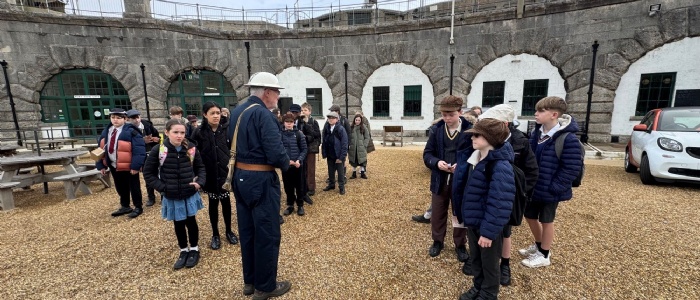
Mulberry Class stepped back in time this week with an unforgettable trip to Nothe Fort in Weymouth. What an adventure it was!
Travelling by coach to the seaside town, the children looked the part dressed proudly in their World War II attire. A huge thank you goes to all parents and carers for your fantastic support in helping the children look so authentic. It truly made the experience come alive from the very start.
“1940 Had Arrived!”
Upon arrival, we were greeted by a billeting officer who immediately informed us that 1940 had arrived. The excitement was palpable as the children lined up while their identity cards, which had been carefully made in school, were inspected. Once approved, we descended into the basement of the fort to begin our journey into the lives of evacuees.
Action-Packed Workshops
Throughout the day, the class took part in three immersive workshops. Each one offered a fascinating glimpse into wartime Britain.
Air Raids and Safety
The children learned about the three different types of bombs used during WWII and how civilians kept safe. They discovered the importance of gas masks and air raid shelters. They even experienced what it would have been like inside an Anderson shelter while dramatic bombing sounds played overhead. The class also practised putting out “fires” using foot pumps and buckets of water, just as people would have done during air raids.
Life on the Home Front
Inside a recreated WWII home, the children learned how daily life was very different from today. They had a go at washing clothes using a dolly and a mangle. It was a tricky task that certainly made everyone appreciate modern washing machines.
A visit to Arkwright’s shop helped the children understand rationing and the very small amounts of food families were allowed each week. One powerful message from the day was:
“We had what we needed, not what we wanted.”
This helped the children reflect on how different life was during wartime.
Lunchtime Challenge
At lunchtime, the children took on an assault course. It was a great opportunity to burn off some energy while building teamwork and resilience.
Guarding the South Coast
At the end of the day, before returning home, the children visited the ramparts. There, they learned how important Weymouth was in protecting the south coast of England during the war. They discovered how the fort’s location made it a vital defence point and how soldiers would have kept watch over the coastline.
A Credit to Our School
The behaviour, enthusiasm, and engagement shown by Mulberry Class were outstanding throughout the day. They fully embraced the experience and represented the school brilliantly.
After a full day in 1940, we climbed back aboard the coach and safely returned to school in 2026.
Well done, Mulberry Class. What a fantastic journey through history!